
In1928 a railway line was laid through Therien and Glendon, boosting the development of both communities. As Glendon evolved into a vibrant trading centre, local Orthodox residents began to think it was too far to travel to Gifford to attend Divine Liturgies. However, a number of years would pass before they were ready to embark on the construction of their own place of worship. In fact, they initially decided to erect a Narodnyi Dim that could be used for community functions as well as religious services until a proper sanctuary could be built. Work began on a hall in 1935, when trees were harvested on properties owned by Orthodox church supporters in the Truman district north of Glendon. After being sawn into lumber, the green wood was then hauled across difficult terrain by teams of horses into Glendon. A frame structure was completed the following year at a site on lot 3 block 4, and scheduled to be blessed at a grand opening in October.
However, when Frs. Mayba and Wasyliw arrived on the appointed Sunday for the service, they discovered that the hall had been burnt down just a few hours earlier, probably by an arsonist, though no one was ever charged over the incident. Consequently, the Divine Liturgy was hastily relocated to Gifford, after which the somber worshippers returned to Glendon for what was supposed to have been a celebratory dinner that had to served at a different community hall.
Dismayed but undeterred, the faithful supporters of the hall and church spent another winter cutting trees, sawing the logs, and then hauling the timber thirty miles to where the first hall lay in ruins. In the summer of 1937, the hall was rebuilt by volunteers working under the supervision of Harry Guzyk, the president of the Narodnyi Dim. This facility was subsequently utilized for religious services in the community until a separate church could be built.
In the autumn of 1939 the members of the National Hall based congregation entered into negotiations for a parcel of land measuring 210’ by 420’ at NW 4-61-8 W4. This property was eventually acquired for $70, notwithstanding some complications in getting it legally registered. Significantly, in 1940 Glendon was visited by Rev. Semen Sawchuk, the administrator of the UGOC, who encouraged the congregation in their efforts to build a church. Nonetheless, many hardships lay ahead before the Glendon faithful were finally able to realize their dreams of having a purpose-built place of worship.
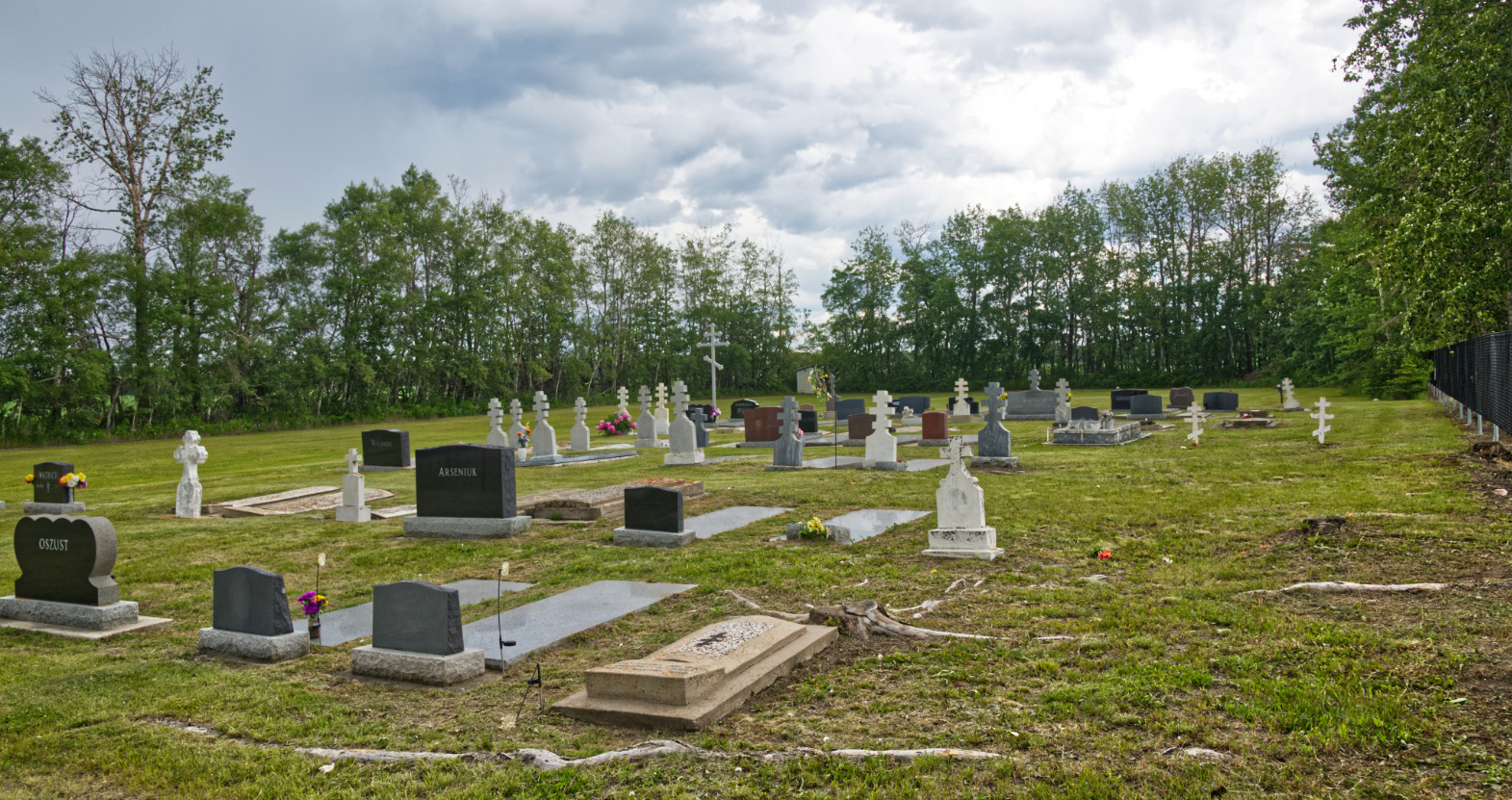
In 1944 the congregation was at last getting ready to proceed with the construction of a church when their parish priest, Fr. Woytowich, took ill with pneumonia and suddenly died in Bonnyville. He was interred in the Glendon cemetery. Undaunted by this latest setback and their lack of a priest, the congregation forged ahead in making arrangements to purchase the necessary lumber from Louis Krekoski of St. Paul, with each member being asked to contribute $25 toward a building fund.
Then, at the annual meeting held on 4 February 1945, the executive was authorized to write to the Consistory with a request that they assign a clergyman who could be based in Glendon while also serving the neighbouring communities of Gifford, Therien, Sandy Rapids and Lessard. In anticipation of the arrival of a permanent priest, the congregation also moved to rent a home in Glendon as a manse for a period of two years.
At another meeting held just eight days later, the congregation passed a formal resolution calling for the construction of a church, at a time when the building fund totalled $800. The following month, Fr. Wasyl Senishen settled in Glendon with his young family, and energetically threw himself into the task of spearheading the construction of the church. A building committee comprised of Alex Strembitsky, Harry Osoba, Bill Wolanski and Harry Spasiuk worked with Fr. Senishen in selecting an appropriate plan, and Vivian Sheldrew, assisted by Harry Osoba, was contracted as the main carpenter. Work on the structure proceeded quickly over the summer months, so that by the fall Fr. Senishen was able to bless the sanctuary, even though it several more years to be fully finished. At this time, the church appears to have been dedicated to the Descent of the Holy Ghost, as indicated by correspondence with the Consistory, so the first service likely took place on or around 14 October.
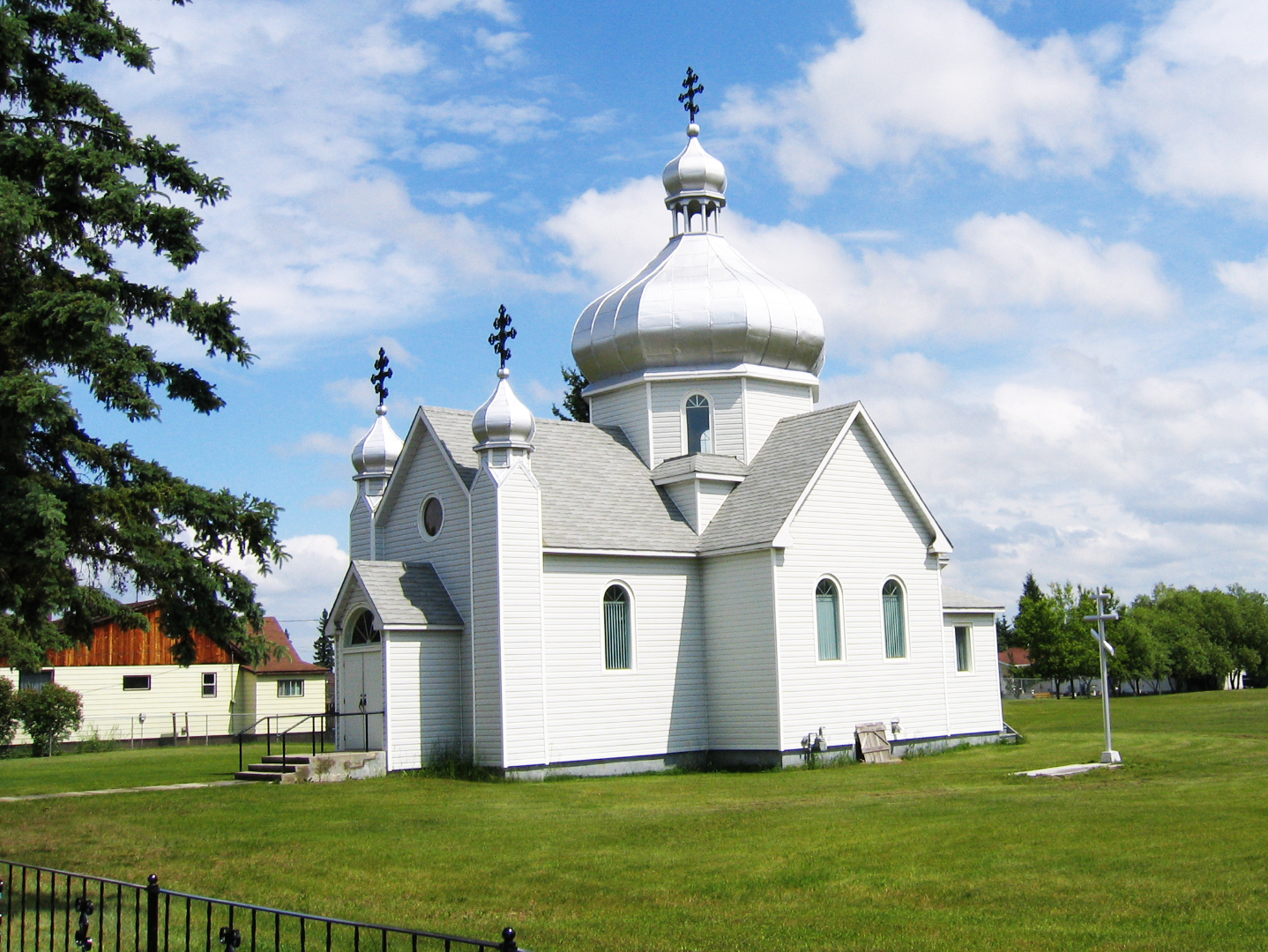
However, disaster again struck the congregation when the second Narodni Dim was consumed by flames in November 1945 – making it necessary for several services to be held at the local Lutheran Church until the new sanctuary could be made usable on a regular basis. Once more, arson was suspected in the blaze, though hard evidence was impossible to obtain. Dismayed but not defeated by the latest blow to their efforts, members of the congregation subsequently directed their energies toward their church, a harmoniously configured cruciform structure with a large central dome and two smaller domes over the corners of the façade.
By the summer of 1947 Glendon members were prepared to proceed with the construction of yet another hall, with Harry Osoba being hired as the contractor for the sum of $600, though he eventually donated most of his labour. This time, the 40’ x 60’ structure was constructed out of bricks and included a full basement, making it both more durable as well as being highly functional. By the fall, this third Narodnyi Dim was ready to be pressed into service for a wedding reception, even though it necessary for Harry Ostoba to install the last pillars and nail them into place as the capacity crowd was putting the dance floor to its first serious test. Fortunately, the structure not only withstood this rigorous workout, but was ultimately spared the malicious destruction that had befallen its predecessors.
Hardships continued to dog the Glendon congregation, as reported memberships for the years 1970-1973 were 19, 15, and 8, some of whom were widows or widowers – a trend that did not bode well for the future. The situation prompted a request to be made that for 1974 the number of Divine Liturgies be reduced to six (from the twelve services held in the previous year) because the parish was finding it difficult to meet its financial obligations.
Although by 1976 the paid membership had increased to 12, the congregation asked the Consistory for permission to sell the aging and deteriorating Narodnyi Dim (which was no longer used, and still lacked water or gas), along with some vacant land that formed part of the church property. The proceeds from these sales were to be divided between a lifetime congregational membership in a new recreational complex being built in the village, and a trust account in the name of the parish. The hall was eventually sold for the sum of $25,000 to Kastelen Enterprises Ltd. in 1980, concluding yet another chapter in the congregation’s history.
Somewhat incredibly, in 1986 members of the Glendon church belatedly resolved to finally become officially incorporated as part of the Ukrainian Greek Orthodox Church of Canada, completing the necessary forms (under the name “Descent of the Holy Spirit”) at meeting held on 14 November. In 1994, the congregation reported having a total of 24 members (having grown by three from the previous year), comprised of 9 families and 6 individuals.
Play Memory Eternal Chant
GPS Co-ordinates:54.248556, -111.153381
Cemetery Co-ordinates: 54.24010, -111.15389
Affiliation: Ukrainian Orthodox Church of Canada


Holy Trinity Ukrainian Orthodox Church – Glendon, AB


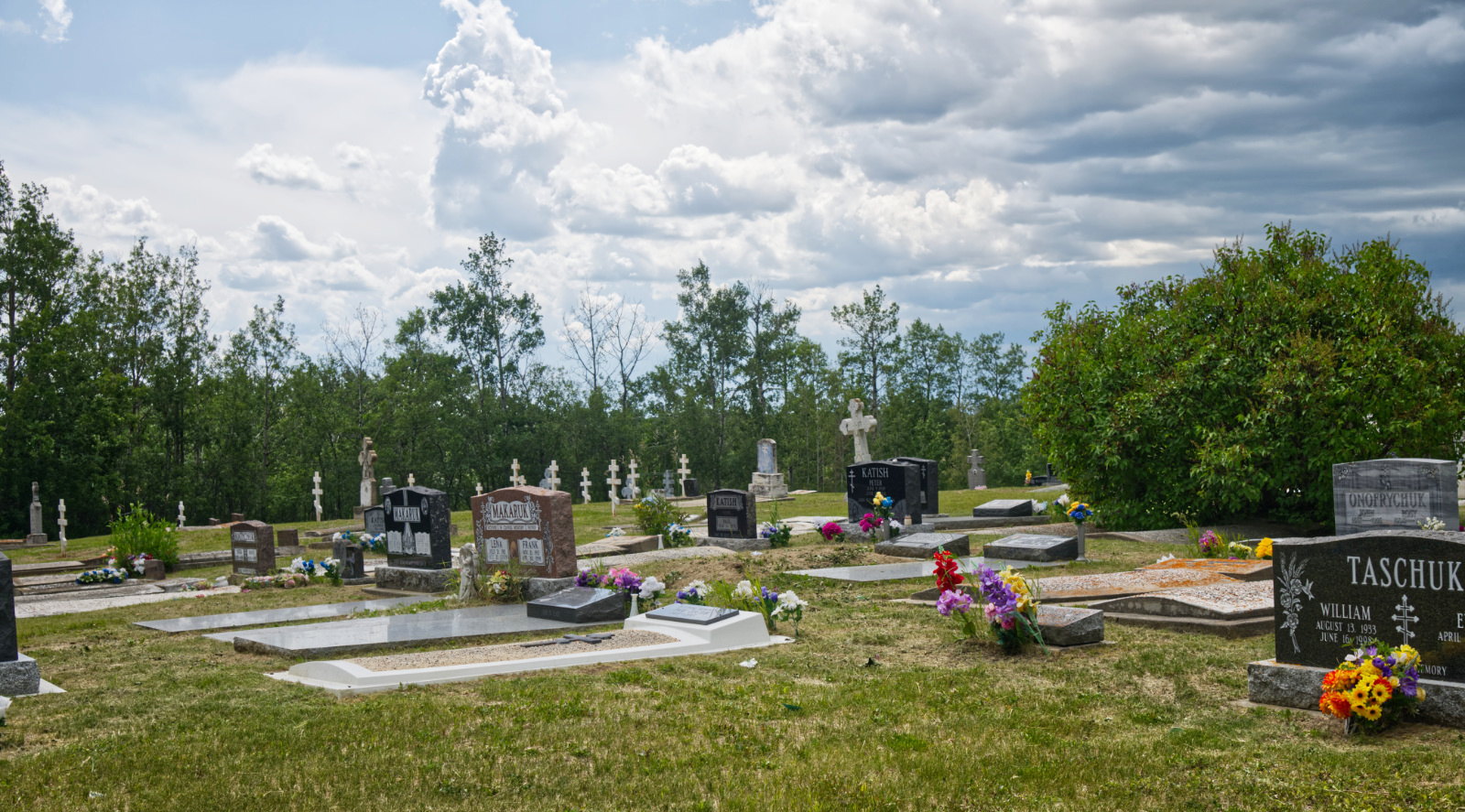
Now known as Beacon Corner, this district was originally called “Nova Bukovyna” by the Ukrainian pioneers who settled it in the early 1900s. It was subsequently renamed Gifford after a school district was created in 1921. Congregational life was initiated in 1914, when forty-three local residents paid a fifty-cent annual membership fee and registered themselves under the name Nova Bukovina, St. Peter and St. Paul Russo Orthodox Church. Around this time, a cemetery was started on a property that was originally settled by Paul Olenick, who filed for his quarter (at NW 15-60-8 W4) with the Land Titles office on 12 December 1914. However, it soon became apparent that the low-lying piece of land that they had selected was subject to seepage from the water table and was therefore not ideally suited for a graveyard. Consequently, in 1915 a second four-acre parcel was demarcated on the crest of a hill on a quarter section belonging to William Apostoluk (at SW 23-60-8 W4), one of the founding members of the congregation. Soon after, members of the congregation began brushing the site and cutting and hauling timber from the property of Wasyl Bordeniuk, a task made more difficult because of the rolling terrain that had to be traversed by the horses.
In the meantime, occasional services were held in the homes faithful adherents, with Fr. P. Dohanko commuting by wagon from Szypenitz, outside of Two Hills, several times a year to minister to the community. Parishioners either waited for these sporadic visits to have weddings and baptisms, or else travelled sixty miles to Szypenitz to receive sacraments. Sometimes they turned to Roman Catholic clergy at nearby St. Vincent (formerly Denisville) in moments of necessity. But mostly they tried to schedule marriages and christenings during the visits of Orthodox priests.
By 1917 there was sufficient dried wood to begin construction of a church. Work proceeded under the direction of Tom Onyshko and Metro Morie, who acted as the chief carpenters. The simple log structure, adorned with a small, centrally placed dome, was largely completed in 1919 and henceforth referred to as “the church on the hill” (tserkva na horbku) by Ukrainian and non-Ukrainian farmers alike because of its prominent place on the landscape. The first service in the new sanctuary was celebrated by Fr. Elkowich on the Feast of the Pentecost, when two couples were married and a baptism took place. His arrival was somewhat delayed as his vehicle got stuck on a muddy trail near St. Vincent. He had to be conveyed the rest of the distance by a local settler. The finished church was formally blessed on 12 July 1920. It was dedicated to Sts. Peter and Paul, after which a celebratory dinner was held to mark the inaugural khram, or feast day.
A few years after the establishment of the Ukrainian Greek Orthodox Church of Canada, most of the members of the congregation voted to affiliate with the new formation. Consequently, from 1926 onward the Nova Bukovyna community – which by then had become known as Gifford – was served by clergy with the UGOC, beginning with Fr. Tymofii Horbay. As the first Orthodox church to be built in the Glendon-Bonnyville area, for some time Sts. Peter and Paul provided for the spiritual needs of the Ukrainian settlers in several outlying districts that eventually built their own sanctuaries.
Over the years, the original log church underwent a series of renovations and improvements. The logs were stripped and covered with painted siding, and a vestibule was added to the structure. An attractive wooden bell-tower was also erected on the site, housing a large, mellow-toned bell that was donated by the Kostiniuk family. When the floor began to show signs of decay, it was removed and replaced by a concrete slab that was subsequently carpeted. The entire church property was newly fenced and gated to keep out animals. In 1960, a hall was erected and henceforth utilized for both church and community functions. Similarly, the winding trail that for many years provided access to the hilltop was eventually abandoned for a road that climbed straight up the slope thanks to an appropriately modified gradient.
Only scant information is available about the activities of the Nova Bukovyna faithful. In 1953 it was reported that the congregation had just four members and that only one Divine Liturgy was celebrated at Sts. Peter and Paul. Most of the residents of the district were regularly attending services at Holy Trinity church in Glendon. It was further revealed that the congregation still did not formally belong to the Ukrainian Greek Orthodox Church of Canada, despite having voted to join more than a quarter of century earlier. This situation was only rectified in 1959, when an annual meeting held on 14 June resolved to accept the bylaws of the UGOC. The parish was duly granted a certificate of admission, or hramota.
By this time, the circumstances of the congregation had improved considerably, albeit at the expense of the Holy Ghost parish. According to a letter from an executive member with the latter, the Glendon Church had been gradually weakened by the departure of some of its members from the area. A dissaffected group had broken away and joined the “country” church at Gifford. Thus, in 1960, Rev. Dorosh-Zmiyiewsky reported to the Consistory that he had celebrated seven Divine Liturgies at Sts. Peter and Paul, which by then, boasted a membership of 15 families. It was at this time the congregation erected a hall on its property and undertook other improvement projects. Although in 1965 Gifford was reported as having 19 members, in the decade following the Nova Bukovyna community began to experience a gradual decline. A letter written to the Consistory in March 1972 indicated that four of its members had died in the previous year and that the aging church was in bad need of repair. Nonetheless, the faithful of Gifford persevered in their efforts, and the church continued to be maintained and used by local adherents. Significantly, on the congregation’s feast day of 12 July 1986. Bishop John celebrated the first hierarchical liturgy at the “Nova Bukovyna” Church in its more than sixty year history.
The Cemetery
Initially established at NW 15-50-8 W4, the first burials appear to have taken place by 1911 (Devonizny Welychka, though the same source also suggests that John Wynnychuk was the first to be interred in 1912). As these pre-dated the registration of the cemetery property by a number of years, and several unmarked graves might be from still earlier times, it seems likely that the community simply began using the parcel of land as need arose and only later got around to formally establishing it as cemetery. Despite problems with this site due to water seepage, it nevertheless continued to be used until 1926. Meanwhile, a second graveyard was started in 1915 at a more appropriate location 2-1/2 miles to the northeast of the original burial ground (at SW 23-60-8 W4), where the first recorded interment was that of a Mrs. Hostiuk. Sts. Peter and Paul Church was built on the same parcel of land as this second cemetery.
Play Memory Eternal Chant
GPS Co-ordinates: 54.20080, -111.10400
Affiliation: Ukrainian Orthodox Church of Canada
Sts. Peter and Paul Ukrainian Orthodox Church – Gifford, AB
The area around Fedorah was heavily settled by Ukrainians in the first decade and a half of the twentieth century. Orthodox settlers in the Fedorah district initially had to travel all the way to Edmonton to fulfill their spiritual needs, as for many years the closest place of worship was a Ukrainian Catholic church that had been erected in nearby Waugh in 1904. The first Orthodox liturgy was celebrated at Fedorah in 1928 by Rev. E. Olendy, after which services took place on an irregular basis at the local National Home. This hall was built in 1917-1918 by volunteers working under the direction of a Fedorah-area farmer who in the old country had been personally acquainted with the writer, Ivan Franko (1856-1916) – after whom the Fedorah Prosvita Society took its name. The original Ivan Franko Prosvita Society included Orthodox, Catholic and freethinking socialist members, but officially remained unaffiliated with any church or political group.
In 1933 an Orthodox congregation was formally organized at a meeting that was held following a Divine Liturgy. The founding executive elected at this gathering was headed by M.S. Ferbey and included Wasyl Belziuk and John Woywitka, with S. Ozipko, Steve Draginda and J. Kryschuk serving as elders. At another gathering held later that same year at the home of Wasyl Kostiw, it was decided to acquire land for a church and a cemetery. In April 1934 the congregation purchased two acres of land for a cemetery at NE 31-57-23 W4, three miles north of the present-day church, on the west side of Lily Lake Road. Wasyl Kostiw also offered to donate an acre on the corner of his quarter section opposite the cemetery site for a sanctuary. Subsequently, four deceased members of the congregation were interred at this burial ground, which was eventually fenced and had a cross erected on it. However, with time it was decided that the property had too many stones and was less than ideally situated for a church. There was growing opinion that the church should be located closer to the Ivan Franko Prosvita Hall, which continued to be used for services.
A further complication arose when in 1935 the Fedorah hall was destroyed by a fire that also consumed its library, chairs, and theatrical resources. The suspicious blaze was widely attributed to arson, as Ukrainians in the Fedorah-Waugh area were becoming increasingly divided along political lines. Undaunted by the difficult blow that they had suffered in the midst of the Great Depression, the Orthodox and Catholic members of the Ivan Franko Prosvita rallied together and rebuilt their hall within months of its destruction, so that by the fall it was once again operational. Fortunately, insurance paid for some of the lumber and the services of a professional carpenter, who was assisted in his work by local volunteers. Nevertheless, by this time the unity of the Prosvita membership was increasingly being tested by the religious differences between the Orthodox and the Catholics, which caused many heated discussions about the orientation of the hall and its use as a place of worship by the former.
In 1936, Ukrainian Catholics in the Fedorah area built a church dedicated to the Immaculate Virgin Mary on the other side of the road from the Ivan Franko Prosvita. In the mid-40s, this congregation acquired an old school for hosting parish functions, and consequently the Catholic members of the Ivan Franko Society gradually reduced their participation in the cultural and social activities of the Fedorah Prosvita. As a result, the Franko Hall essentially became identified with the Orthodox community, though on paper it always remained a formally independent body unaffiliated with any church.
Determined to finally have a proper place of worship, the Orthodox faithful of Fedorah in 1945 embarked on the construction of a brand-new church on property that they had obtained for a reasonable price through the efforts of Mike Kuzyk (it was owned by his mother) across the road from the Ivan Franko Prosvita. The modest tripartite sanctuary – which boasted a medium-sized dome over the entryway, and two smaller domes on towers framing the facade – was completed and consecrated in 1947, when it was dedicated to St. John the Baptist. In the meantime, founding members Joseph Kryschuk (President) and Nick Boyko (secretary) signed the Act of Incorporation and Bylaws on behalf the congregation on 6 July 1946, with Commissioner of Oaths, William Hawrysh, adding his signature a week later.
By 1949 seven liturgies a year were being celebrated at the church, a figure that remained fairly constant for the next decade and a half, although the congregation membership gradually declined from sixteen families in the late 1940s to just eight by 1957. The previous year, responsibility for St. John the Baptist Church had been transferred from the Radway district to priests serving the Greater Edmonton area.
A happy occurrence took place on 13 July 1958, when Fedorah native Meroslaw Kryschuk (born 1931) was consecrated into the priesthood in his home church by Metropolitan Ilarion, after which Fr. Meroslaw was assigned to pastoral duties in Myrnam, Alberta. Father Kryschuk’s maternal grandparents had settled in the Fedorah district in 1903, and his parents were among the founding members of the congregation.
The Cemetery
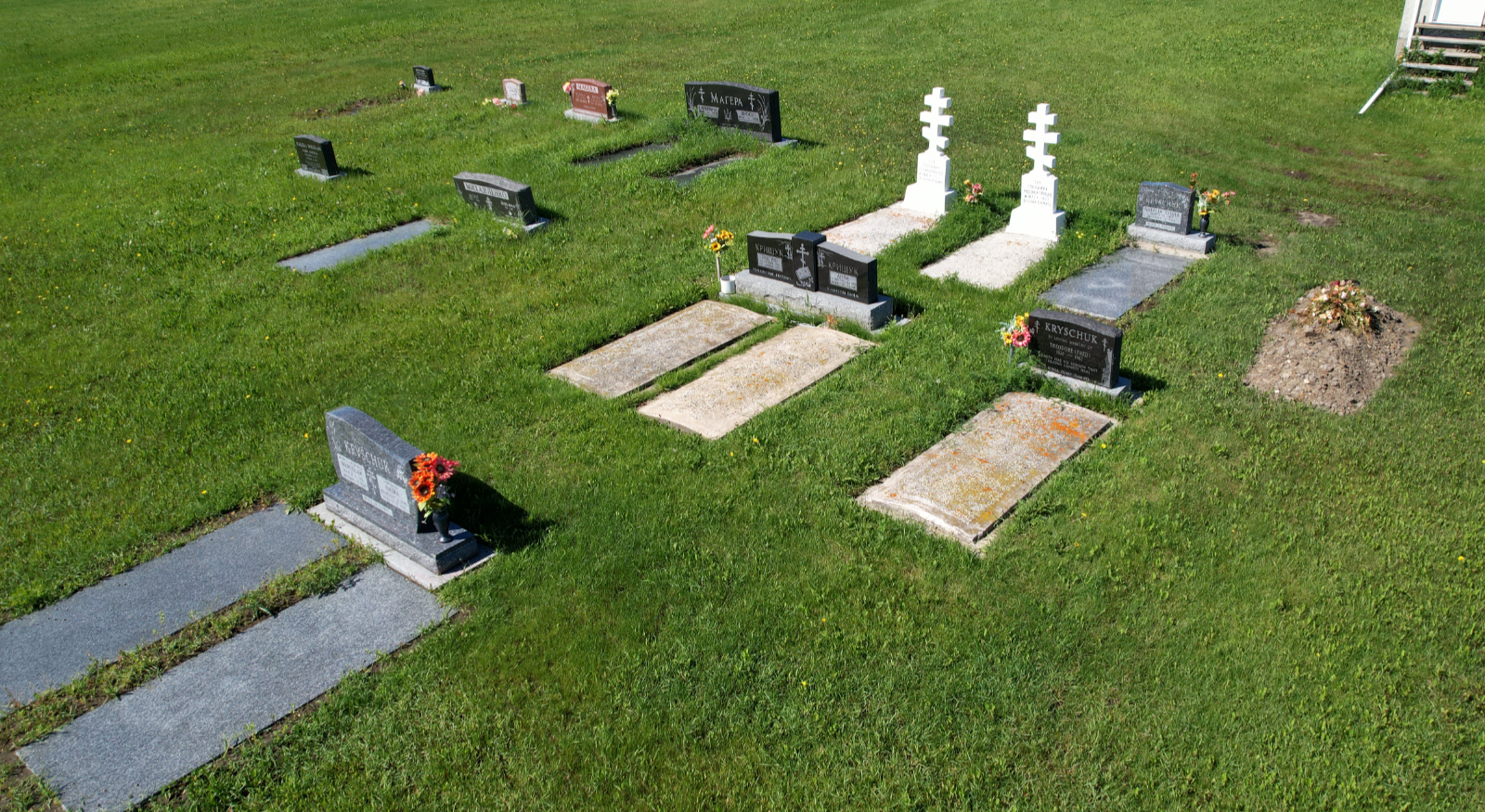
Originally at NE 31-57-23 W4. On 26 October 1966, the four burials at this site were solemnly disinterred and the remains were moved to the cemetery that was established on the church property. The new cemetery had been consecrated on 14 August, when a cross was also dedicated by Fr. I. Kulish.
Play Memory Eternal Chant
GPS Co-ordinates: 53.936129, -113.396998
Affiliation: Ukrainian Orthodox Church of Canada
Saint John the Baptist Ukrainian Orthodox Church – Fedorah, AB

Work towards founding a Ukrainian Orthodox parish in Elk Point began early in 1945 on the initiative of Fr. W. Senishen. The need to have an Orthodox Church in the community became especially apparent in the spring of that year, when Fr. Senishen officiated a wedding at the old United Church, assisted by its minister, Rev. Pringle. Subsequently, several Divine Liturgies were celebrated at the Andrishak Hall, after which the Orthodox faithful of Elk Point utilized the Fred Shpeley Building for services. Following a 1946 liturgy in the latter, an organizational meeting was held that elected an executive headed by Willliam Andrishak. Two years later, it was decided to adopt St. Volodymyr as the patron of the newly formed congregation. In the meantime, members had already begun raising the money required to build a church and establish a cemetery.
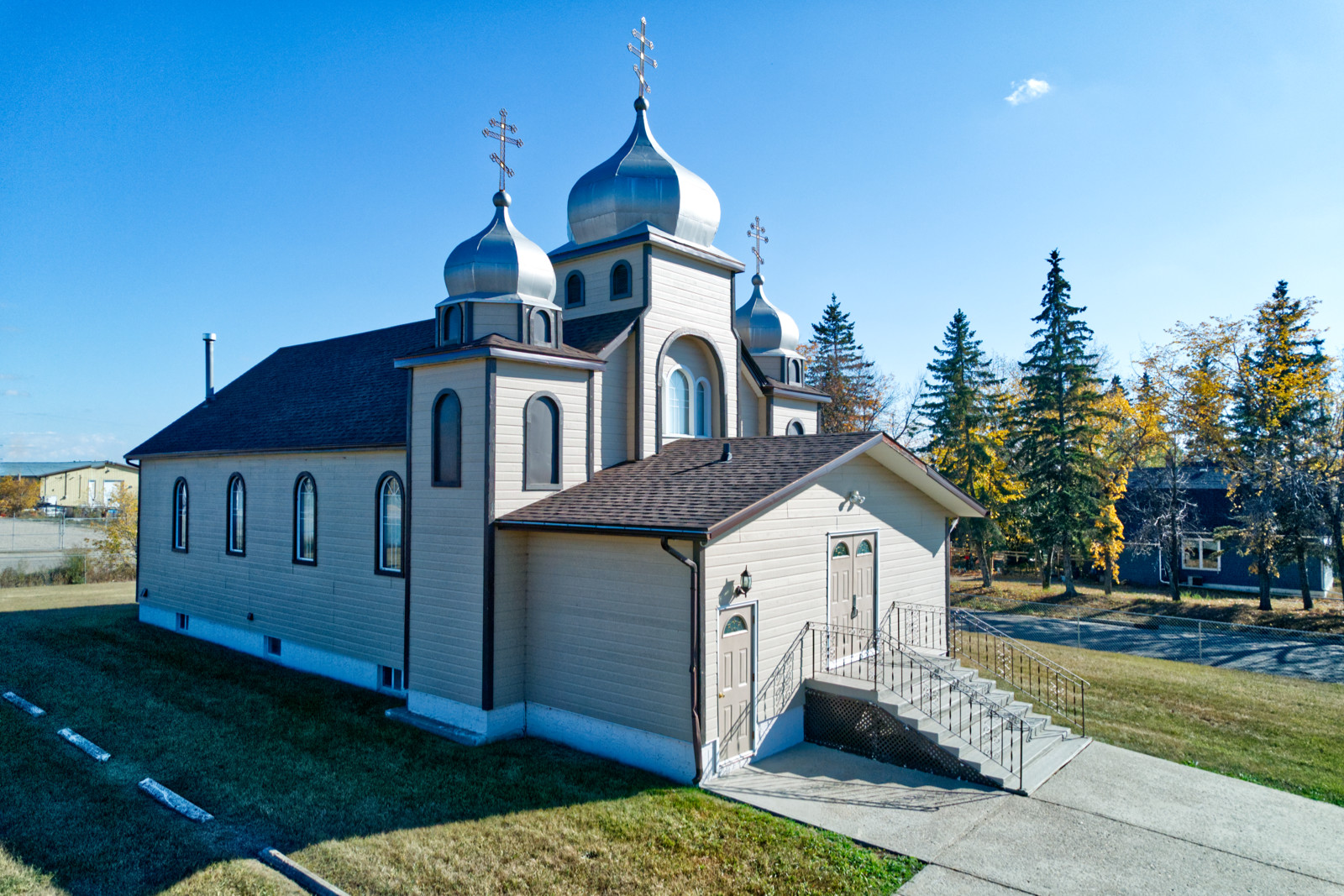
Two lots were originally bought for this purpose behind Markstead’s garage. In the winter of 1949, volunteers went out into some bush belonging to a member, J. Borutsky, to harvest timber for the construction of a sanctuary. However, around the same time, the congregation decided that the land that they had acquired was not really suited for its intended use. Fortunately, W. Andrishak, stepped forward to generously donate the property that eventually became the location of St. Vladimir’s Church. This new site was blessed in 1950 by Rev. Wasyl Boychuk, construction of the sanctuary proceeding in stages over the course of several years, with the pace essentially being determined by the availability of funds.
Approximately forty families were members of the congregation when work began on the church. In these early years, priests usually traveled by train to provide services for Elk Point. Such a trip from Glendon required an overnight stay en-route to make the necessary connections. For their services clergymen were paid whatever money was contributed on the collection plate, earning an amount that typically came to about $7.00 after they had covered their expenses.
In 1950 a basement was dug by J. Zacharuk with a tractor, frezno, and volunteers using picks and shovels. Next, the foundation was partially poured, and by 1952 walls were ready to be erected by a team of church members working under the supervision of J. Borutsky. At this time, a roof was also placed on the structure, but further work was then suspended for two years.
Some progress was made in 1955 when the exterior was stuccoed, and a few services were held during the summer months in the partly completed sanctuary. However, in 1956 and 1957 the as yet undecorated church was leased to the County of St. Paul for use as a classroom, while money continued to be raised to properly finish the interior. This was largely accomplished in 1958, when a second floor was laid, plasterboard was put on the walls, and an altar and pews were built. Fixtures and religious pictures donated by members were also installed in the church, which had been painted by B. Eaton with the help of volunteers.
In 1959 the congregation determined that it was not possible to have a cemetery on the church property, and therefore obtained land for this purpose at another location, donated by Mr. and Mrs. F. Shewchuk. Two years later, the cornerstone of St. Vladimir’s was blessed during an Episcopal visitation by Bishop Andrew, who celebrated a hierarchical liturgy with Frs. Greschuk and Dorosh. In 1964, Elk Point parishioners contributed toward the purchase of a manse in Bonnyville, which was paid off in just six months’ time with donations and proceeds from bingos. A short while later, St. Vladimir’s members also participated in a successful drive to establish the Kiev-Ski-Hi church camp at Moose Lake. A popular summer retreat, the camp soon became the focus of seasonal cultural, educational, and spiritual programs for young people, in addition to serving as a recreational facility for the entire Ukrainian Orthodox community of east central Alberta.
Over the years, the St. Vladimir’s congregation has been involved in a wide variety of projects and causes. In 1967 its members participated in the formation of a joint Ukrainian Catholic and Orthodox all-male Centennial choir, and donated money towards the construction of the Elk Point Elk’s Hall. Besides fulfilling its Christian mission, the church has also been active in promoting Ukrainian culture, providing language instruction, offering singing courses and other educational classes.
In the summer of 1986, the church underwent extensive renovations, when three domes that had previously graced the old St. Vladimir’s church in Calgary were salvaged and installed after being renovated atop its namesake in Elk Point. The new domes were then blessed on 26 September of the same year by Bishop John on his first visitation to Elk Point, accompanied by Fr. A. Shcherban and the 40-voice All-Edmonton Millennium Choir. Along with the domes, Bishop John also blessed a new cross and candleholders that had been donated by the Sharuga family in memory of a long-time member, Anna Yacena.
GPS Co-ordinates: 53.899381, -110.895828
Affiliation: Ukrainian Orthodox Church of Canada